

Case study . April 7, 2024
The Hidden Cost of Platform Dependency
Like many real estate agencies, they relied heavily on:
It worked — but only to a point.
Because the business had no real control over its pipeline.
Good leads were missed.
Hot prospects went cold.
And revenue was left on the table.
The Real Problem
The issue wasn’t lead generation.
It was lack of structure and visibility.
So even when opportunities existed…
they weren’t converted efficiently
Closing rates remained suboptimal — not because of demand, but because of execution gaps.
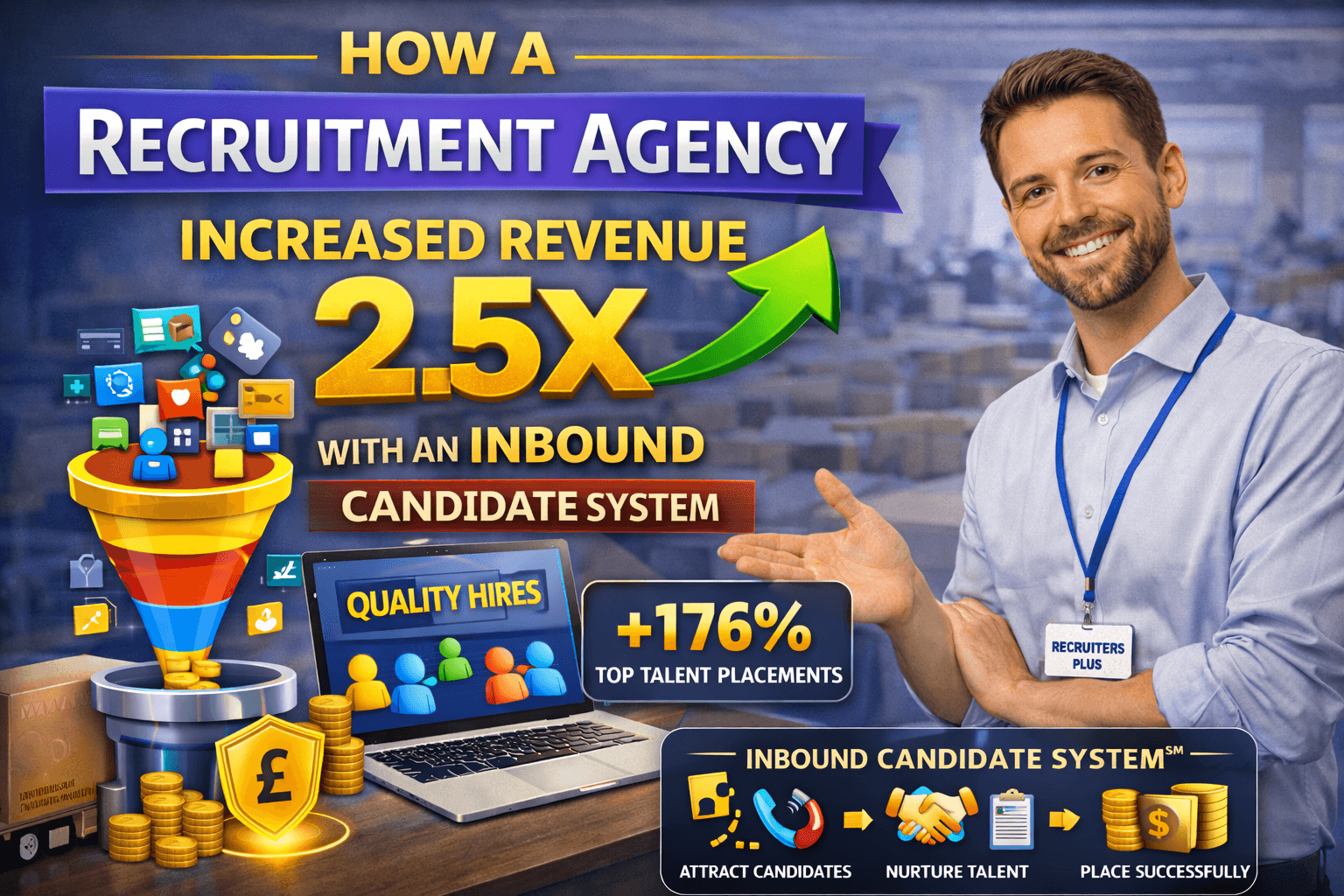
From the outside, the agency looked productive.
Recruiters were busy.
Roles were being filled.
Outreach was constant.
But growth was slow.
Candidate flow was inconsistent.
Sourcing took up a significant amount of time.
And placements depended heavily on manual effort.
The team wasn’t lacking activity.
They were lacking leverage.
The Hidden Cost of Manual Sourcing
Like many recruitment agencies, the approach was straightforward:
Source more candidates → fill more roles → grow revenue
So the team doubled down on outreach.
More job postings.
More cold messages.
More time spent searching.
But the results didn’t scale.
Revenue was tied directly to effort.
And that creates a ceiling.
The Real Problem
The issue wasn’t demand.
There were candidates actively looking for opportunities.
there was no system to attract and manage them consistently
So even when candidates were available…
they weren’t captured efficiently
and opportunities were missed
The Shift: From Chasing Candidates to Attracting Them
Instead of increasing outreach, we made a strategic shift:
Build a system where candidates come to you — already qualified
We implemented a structured Inbound Candidate System.
Demand Generation
We introduced an SEO strategy and content targeting job seekers, ensuring the agency appeared where candidates were already searching.
Funnel Structure
Application funnels with qualification filters ensured that only relevant candidates progressed.
CRM Integration
Every candidate was tracked and segmented, giving the agency full visibility over talent pipelines.
Follow-up Automation
Engagement workflows and job matching sequences ensured that candidates were nurtured and placed faster.
The shift created immediate operational impact.
Recruiters spent less time sourcing — and more time engaging.
The pipeline became more efficient and predictable.
Growth was no longer limited by recruiter capacity.
What This Really Means
The agency didn’t just get more candidates.
It changed how it acquired them.
a system that consistently attracts, qualifies, and converts candidates into placements
Revenue doesn’t scale with effort —
it scales with pipeline efficiency.
Once that system was in place,
growth stopped depending on individual recruiters…
and became process-driven and scalable.


Stop relying on campaigns that may or may not work. Start building a system that:
26-30 New Damietta
El-Mahalla El-Kubra, SK1 66LM
